Invisalign® clear aligner therapy offers a modern, discreet alternative to traditional braces. Using a series of custom-made, virtually invisible trays, this approach moves teeth gently and predictably while preserving your daily routines. For many adults and teens, clear aligners strike a balance between effective orthodontic correction and a low-profile aesthetic.
Clear aligners blend clinical precision with a design that keeps treatment out of the spotlight. Because the trays are made from smooth, transparent material, they sit close to the teeth and are difficult to notice in everyday interactions. That discretion makes aligners especially appealing to people who want to improve their smile without a visible appliance.
Beyond appearances, aligner systems are engineered to manage a broad range of alignment issues. Modern treatment planning uses three-dimensional records and staged movements so clinicians can sequence tooth positions with fine control. This lets doctors address spacing, crowding, and a variety of bite concerns while monitoring progress at regular checkups.
Patients also appreciate the practical advantages: aligners are removable for eating, drinking, and oral hygiene. That removability reduces many of the lifestyle trade-offs associated with fixed braces, while still enabling consistent, controlled tooth movement when the aligners are worn as directed.
The clinical journey begins with a focused consultation and a thorough oral exam. Your provider evaluates tooth alignment, bite relationships, and overall oral health to determine whether clear aligners are an appropriate option. This step ensures that we address any underlying concerns before moving forward with orthodontic planning.
Next comes digital imaging and impressioning. A fast intraoral scan captures the exact contours of your teeth and bite, producing a precise 3-D model used for treatment simulation. This digital foundation allows clinicians to visualize each planned movement and to preview projected outcomes before manufacturing the aligner series.
Once the treatment plan is finalized, a sequence of custom aligners is fabricated to guide teeth through planned positions. Typically, patients wear each set of aligners for a prescribed period before progressing to the next, and periodic clinical visits help the doctor confirm progress, make adjustments when necessary, and ensure treatment remains on track.
Clear aligners are suitable for many people with mild to moderate orthodontic needs, including crowding, spacing, and certain bite irregularities. Because treatment is customized, clinicians can often address multiple tooth movements within a single plan. However, complex skeletal issues or severe bite discrepancies may require a different orthodontic approach or adjunctive treatments.
Age is no longer a limiting factor for aligner therapy; both motivated teens and adults commonly achieve excellent outcomes. For younger patients, careful clinical assessment ensures timing aligns with growth and development, while adult patients often appreciate the discreet nature of the appliance and the ability to maintain professional and social routines during care.
A candid discussion with your dental provider will clarify if aligners are the right path for you. The clinical team can explain the expected scope of correction, timelines, and any additional steps—such as interproximal reduction or attachments—that may be recommended to achieve optimal results safely.
Success with clear aligners depends largely on consistent wear and proper care. Clinicians typically recommend wearing aligners for most of the day, removing them briefly for meals and oral hygiene. Because the trays are removable, it’s easier to maintain excellent brushing and flossing habits—an important advantage for long-term oral health during orthodontic treatment.
Cleaning the aligners is straightforward: rinse the trays with cool water after removal and brush gently with a soft toothbrush to minimize buildup. Avoid hot water or abrasive cleaners that could warp or scratch the material. Keeping a dedicated case on hand helps protect aligners between wear times and reduces the risk of loss or damage.
Regular clinical check-ins allow the team to monitor fit and tooth movement. If an aligner feels unusually loose or causes persistent discomfort, contact the office to have it evaluated. Prompt attention to fit and compliance helps keep treatment on schedule and ensures predictable, safe outcomes.

At your first appointment, a dental exam and imaging give the clinical team the information needed to create a personalized plan. This stage focuses on understanding your goals and mapping the most efficient path to the desired alignment.
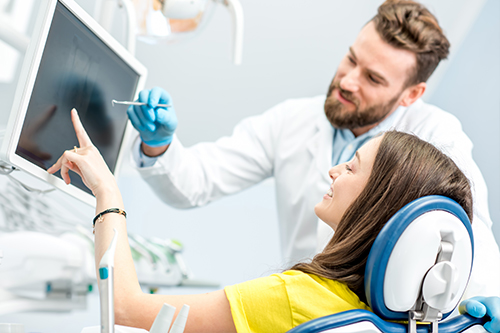
Fast, high-resolution intraoral scans capture the shape of your teeth and bite without messy materials. These scans form the basis for a 3-D simulation that illustrates how each phase of treatment will move your teeth over time.
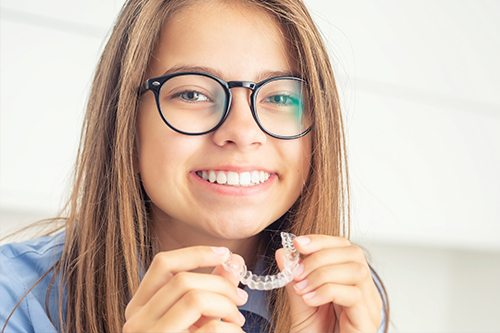
Each aligner in the series is manufactured to the precise specifications of your plan and designed for comfort. Periodic checkups confirm that the trays are applying the intended forces and that progress aligns with clinical expectations.

While aligners enable a high degree of independence, the treating clinician remains an active partner throughout therapy—reviewing progress, refining the plan when needed, and helping you transition to retention once active treatment is complete.
Contemporary aligner therapy relies on advanced digital workflows that translate scans into staged movements with measurable precision. By visualizing the entire treatment from start to finish, clinicians can plan tooth movements in sequences that consider biology, occlusion, and esthetic outcomes.
Data from large treatment cohorts and ongoing research have informed refinements to material science and aligner design. These improvements enhance predictability for common tooth movements and support progressive innovations in attachments, auxiliaries, and staging strategies that clinicians can use to manage more complex cases.
Ultimately, the combination of clinician experience and digital planning enables a treatment process that is both flexible and accountable. Regular reviews ensure that the planned outcomes are being achieved and allow the provider to make timely adjustments that preserve safety and effectiveness.
Short videos illustrate aligner fit, typical daily routines, and examples of clinical workflows you can expect during treatment.
*Invisalign® is a registered trademark of Align Technology, Inc.
At Smiles N Beyond in Wallington, NJ, we combine modern aligner technology with attentive clinical oversight to help patients pursue straighter, healthier smiles. If you'd like to learn more about how clear aligners could fit your lifestyle and goals, please contact us for additional information and to schedule a consultation.
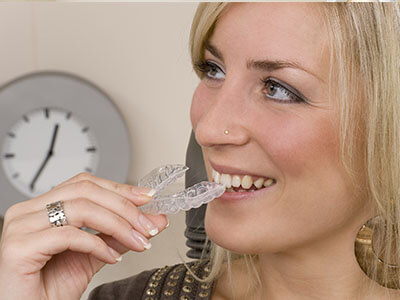

Invisalign clear aligner therapy uses a series of custom-made, transparent trays to move teeth through planned stages. Each tray is designed from a 3-D digital scan to apply gentle, targeted forces that shift teeth into the desired positions. Because the system is digitally planned, clinicians can visualize staged movements and adjust sequencing for functional and esthetic goals.
The aligners are removable, which makes eating and oral hygiene easier compared with fixed appliances. Patients wear each set of trays for a prescribed interval before progressing to the next, while the dental team monitors progress at scheduled visits. Clinical oversight ensures movements remain safe, predictable and aligned with the treatment plan.
Clear aligners are appropriate for many people with mild to moderate alignment concerns such as spacing, crowding and some bite irregularities. Both motivated teens and adults often achieve excellent results when cases are carefully assessed and treatment is planned to address the specific orthodontic needs. Certain complex skeletal problems or severe bite discrepancies may still require traditional orthodontic approaches or adjunctive therapies.
A clinical consultation evaluates tooth alignment, occlusion and overall oral health to determine candidacy and timing. The dentist will discuss realistic goals, any preparatory steps needed and which tooth movements are likely to be predictable with aligner therapy. A candid discussion helps set expectations and establishes the most efficient path to a stable outcome.
The process begins with a focused consultation and oral exam to review goals, dental health and bite relationships. Digital intraoral scans replace traditional impressions and create a precise 3-D model used to simulate the full course of treatment and preview projected results. Once the plan is finalized, a sequence of custom aligners is fabricated to guide teeth through each stage.
Patients typically wear aligners for the majority of each day and switch to the next tray according to the prescribed schedule while attending periodic checkups. The clinical team confirms fit, monitors progress and makes adjustments such as attachments or refinements when necessary. After active alignment is complete, the transition to retention preserves the achieved positions and supports long-term stability.
Treatment duration varies by the complexity of the case and the specific movements required, often ranging from several months to a year or more for more involved plans. Factors that influence timeline include the severity of misalignment, patient compliance with wear time, biological response to tooth movement and any additional procedures that may be required. Regular monitoring allows the team to identify when refinements or staging adjustments are needed to stay on track.
Patient commitment to wearing aligners as instructed is one of the most important determinants of progress and overall timeline. Skipping prescribed wear or delaying checkups can extend treatment while attentive use helps achieve predictable results. The clinician will provide an individualized estimate during the consultation and update it as treatment advances.
Many patients experience mild pressure or soreness when starting a new aligner set as teeth respond to applied forces, and that sensation usually subsides within a few days. Aligners are made from smooth materials designed for comfort and to minimize irritation to lips and cheeks compared with some fixed appliances. Good oral hygiene is easier to maintain because the trays are removable, which lowers the risk of plaque buildup associated with brackets and wires.
Proper brushing and flossing before reinserting trays helps protect enamel and gum health throughout therapy, and clinicians monitor for any signs of decay or soft tissue irritation at follow-up visits. If persistent discomfort or unusual fit issues arise, contacting the office promptly allows the team to evaluate and make necessary corrections. Overall, diligent hygiene and timely communication support a comfortable, healthy treatment experience.
Wear aligners according to your provider's instructions, removing them for eating, drinking anything other than water, and performing oral hygiene. Rinse trays with cool water after removal and clean them gently with a soft brush to remove saliva and debris, avoiding hot water and abrasive cleaners that could warp or scratch the material. Keep a dedicated case on hand to store aligners safely between uses and reduce the risk of loss or damage.
Brush and floss thoroughly before reinserting aligners to prevent trapping food and bacteria against teeth, and attend scheduled checkups so the dental team can confirm fit and oral health. If an aligner cracks, feels unusually loose or causes persistent discomfort, contact the office for guidance on whether to continue wearing, switch trays, or be seen for an evaluation. Consistent care and hygiene help preserve oral health and maintain treatment momentum.
Attachments are small tooth-colored composite bumps bonded to select teeth to help aligners grip and apply specific forces for certain movements. Buttons or attachments may also serve as anchor points for elastics when correcting bite relationships that require additional mechanics. Interproximal reduction, or IPR, is the selective removal of tiny amounts of enamel to create space for tooth movement when crowding needs to be relieved.
These adjuncts are prescribed based on the treatment plan to improve predictability and efficiency for particular tooth movements. The dentist will explain any recommended procedures, their purpose and how they fit into the overall plan during the consultation and throughout active treatment. When indicated and performed conservatively, these techniques support safe, controlled outcomes.
Invisalign offers a low-profile, removable option that many patients prefer for esthetic reasons and for easier oral hygiene compared with fixed braces. Aligners may be especially appealing to adults who want to maintain professional appearance or to teens who appreciate reduced visibility during school and social activities. However, traditional braces can sometimes be more effective for complex tooth rotations, large bite corrections or cases requiring strong, continuous forces that are difficult to achieve with removable trays alone.
The decision between aligners and braces depends on the clinical diagnosis and the treatment goals established by the dental team. An individualized assessment allows the clinician to recommend the most appropriate appliance or combination of approaches to achieve a stable, functional result. Ongoing advancements in aligner technology have expanded the range of cases that can be managed predictably with clear trays, but professional judgment guides the final recommendation.
After active alignment, a retention phase is necessary to preserve the achieved tooth positions while the supporting bone and soft tissues stabilize. Retainers may be removable or fixed and are prescribed according to the specifics of the case and the clinician's judgment about long-term stability. The dental team will explain a retention schedule and provide instructions for wear, care and follow-up monitoring.
Periodic checkups during the retention phase allow the provider to confirm that tooth positions remain stable and to address any early signs of relapse. Long-term retention is an important part of predictable orthodontic outcomes because teeth can shift over time due to natural forces and changes in the mouth. Following retention guidance helps protect the investment of time and effort put into treatment.
To explore whether Invisalign is right for you, schedule a consultation with the dental team to review your goals, oral health and bite relationships. During the visit the clinician will perform an exam, take digital scans and discuss a personalized treatment approach, expected sequence of care and any preparatory steps that may be needed. This appointment is an opportunity to ask questions about daily care, attachments or other aspects of therapy so you understand what to expect.
Smiles N Beyond in Wallington, NJ offers modern digital scanning and clinical oversight to plan and monitor aligner treatment; the team will outline next steps and timing if you choose to proceed. If you prefer, call the office or use the practice contact options to request a consultation and confirm the information you will need to bring to your appointment. The staff can also explain what to expect at the first visit and help coordinate any required records or imaging.

Ready to schedule your next dental appointment or have questions about our services?
Getting in touch with Smiles N Beyond is simple. Our friendly team is here to help you schedule appointments, answer questions about treatment options, and address any concerns you may have. Whether you prefer to call our office, send an email, or complete our easy online contact form, we’re happy to assist you. Take the first step toward a healthier, more confident smile, contact us today and experience the difference personalized dental care can make.